Providing education, support, advocacy, and promoting research
for CTX patients, their families, and medical professionals
who treat and study this rare disease.
Providing education, support, advocacy, and promoting research
for CTX patients, their families, and medical professionals
who treat and study this rare disease.
 10th Annual CTX Family & Science Summit
The 10th Annual CTX Family & Science Summit brought together a record number of patients, families, clinicians, researchers, industry partners, and advocates for an inspiring day of education and collaboration.
Held on Friday, June 26, from 1:30 to 5:30 p.m. during the ULF Family Conference in Oak Brook, Illinois, the Summit featured internationally recognized experts presenting the latest advances in CTX diagnosis, treatment, research, and patient care. A new expert and audience Q&A session gave patients, caregivers, clinicians, and researchers the opportunity to engage in meaningful discussion, making this year’s meeting our most interactive yet. The afternoon program included 12 presentations, summarized below.
 Ophthalmologic Problems in CTX:
Dr. Jennifer Rossen, pediatric ophthalmologist, CTX Alliance Board Member, and recent recipient of a $1 million National Institutes of Health (NIH) grant to advance research on the genetics of pediatric cataracts, opened the meeting with an overview of the eye manifestations associated with CTX. She emphasized that cataracts are the most common eye finding in CTX and often develop during childhood or adolescence, making them one of the earliest clues that can lead to diagnosis. While cataract surgery is frequently successful in restoring vision, early recognition is essential because untreated CTX continues to affect many other parts of the body.
Beyond cataracts, Dr. Rossen explained that CTX can affect several structures within the eye and visual system. Patients may experience conditions such as amblyopia (lazy eye), glaucoma, strabismus (eye misalignment), eyelid xanthelasma (cholesterol-rich deposits), involuntary eye movements (nystagmus), and abnormalities of the optic nerve and retina, which can contribute to reduced vision. Because some vision problems may also be related to neurological involvement of the brain and cerebellum, comprehensive ophthalmologic evaluations play an important role in the care of individuals with CTX.
 Movement, Mobility & Coordination in CTX:
Dr. Brian Wishart, pediatric physical medicine and rehabilitation specialist and member of the CTX Alliance Medical & Scientific Advisory Board, provided an overview of the movement and mobility challenges experienced by many individuals living with CTX. He explained that CTX affects the nervous system in ways that can lead to difficulties with balance, coordination, walking, muscle strength, and overall mobility. These symptoms often develop gradually and may worsen over time if the disease is not diagnosed and treated early.
Dr. Wishart discussed how neurological changes associated with CTX can result in gait abnormalities, muscle stiffness or weakness, tremors, and impaired coordination, all of which can affect independence and quality of life. He emphasized that while medical treatment addresses the underlying metabolic disorder, rehabilitation plays a critical role in helping individuals maintain mobility and function. Physical therapy, occupational therapy, balance training, assistive devices, and individualized exercise programs can all help patients maximize strength, improve safety, reduce the risk of falls, and preserve independence.
 Psychiatric & Behavioral Challenges in CTX:
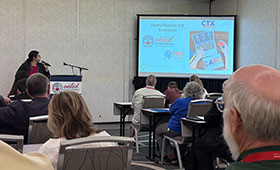
Dr. Amanda Nagy, pediatric neurologist specializing in neurogenetics, explored the often-overlooked psychiatric and behavioral aspects of CTX, emphasizing that mental health symptoms are a recognized part of the disease—not simply reactions to living with a chronic illness. Because CTX affects the brain, individuals may experience changes in thinking, learning, attention, emotions, behavior, and social interactions. These challenges can occur at different stages of life and vary widely from person to person.
Dr. Nagy discussed a range of neuropsychiatric symptoms that have been reported in CTX, including anxiety, depression, mood changes, attention difficulties, behavioral concerns, and, in some cases, psychosis. She stressed that recognizing these symptoms early is just as important as identifying the physical manifestations of CTX, as timely treatment and ongoing monitoring can significantly improve quality of life. Her presentation also highlighted the importance of integrating mental health professionals into the care team and ensuring that families have access to appropriate support services and resources.
 Guide to Nutrition in CTX:
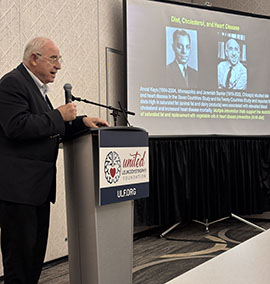
Internationally recognized lipid specialist and nutrition expert Dr. Ernst Schaefer presented an evidence-based overview of nutrition and cardiovascular health in individuals with CTX. While noting that there is limited research specifically examining nutrition in CTX, he explained that maintaining a heart-healthy diet is an important part of overall wellness, particularly as people with CTX age. Because cardiovascular disease can occur in adults with CTX—especially those over age 50 or those with elevated LDL (“bad”) cholesterol—Dr. Schaefer encouraged patients to follow dietary patterns that support heart health alongside their prescribed medical treatment.
Dr. Schaefer reviewed current nutritional recommendations, including limiting foods high in cholesterol, such as egg yolks, butter, cream, and organ meats, while also reducing saturated and trans fats. He emphasized that these dietary changes are intended to lower cardiovascular risk and should complement—not replace—medical therapy. He also discussed how cholesterol-lowering medications, including statins and ezetimibe, may be appropriate for some individuals with CTX who have elevated LDL cholesterol and cardiovascular risk factors. Throughout the presentation, he reinforced that the cornerstone of CTX treatment remains bile acid replacement therapy, such as chenodeoxycholic acid (CDCA), with nutrition serving as an important component of comprehensive long-term care.
 Gastrointestinal Symptoms in CTX:
Dr. Kenneth Setchell, internationally recognized expert in bile acid metabolism and one of the world’s leading authorities on CTX, presented an overview of the gastrointestinal (GI) symptoms associated with the disease and their underlying causes. He explained that chronic diarrhea is often one of the earliest symptoms of CTX, frequently beginning in infancy or early childhood and sometimes occurring years before neurological symptoms develop. Because persistent diarrhea is common to many conditions, CTX is often overlooked, contributing to delayed diagnosis. Recognizing this early clinical sign can lead to earlier testing and treatment, helping to prevent irreversible disease progression.
Dr. Setchell described how CTX is caused by an inherited defect in bile acid synthesis, resulting in a deficiency of important bile acids and the accumulation of abnormal cholesterol metabolites throughout the body. This disruption affects normal digestion and contributes to many of the gastrointestinal symptoms experienced by individuals with CTX. He emphasized that bile acid replacement therapy addresses the underlying metabolic defect and often leads to significant improvement—or even complete resolution—of chronic diarrhea and other digestive symptoms.
 Introduction to Biochemical Testing in CTX:
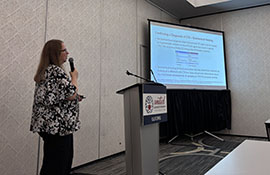
Dr. Andrea DeBarber, Research Associate Professor at Oregon Health & Science University (OHSU), Technical Supervisor of the OHSU Sterol Analysis Laboratory, and Vice President of the CTX Alliance Board of Directors, provided an accessible introduction to the laboratory testing used to diagnose and monitor CTX. She began by explaining the underlying biology of CTX, describing how changes in the CYP27A1 gene disrupt the body’s ability to produce important bile acids. As a result, harmful substances such as cholestanol and bile alcohols accumulate throughout the body, eventually affecting the brain, eyes, tendons, and nervous system. Using the analogy of a “broken assembly line,” Dr. DeBarber illustrated how bile acid replacement therapy helps restore balance by reducing the production of these toxic metabolites.
The presentation focused on the important role of biochemical testing in both diagnosing CTX and monitoring treatment effectiveness. Dr. DeBarber explained that laboratory testing measures biomarkers such as cholestanol, bile acid precursors, and bile alcohols, which provide valuable information about how well treatment is controlling the disease. She also discussed the complementary role of genetic testing, noting that while identifying disease-causing variants in the CYP27A1 gene confirms the diagnosis, biochemical testing is often essential when genetic results are uncertain. Addressing two of the most common questions received by the CTX Alliance—“What do my lab results mean?” and “How often should testing be performed?”—she reviewed current expert recommendations for ongoing monitoring after treatment begins.
 Interactive Expert Panel & Audience Q&A:
One of the highlights of the 2026 CTX Family & Science Summit was the addition of a live panel discussion featuring the day’s presenters. Following the educational sessions, attendees had the opportunity to ask questions directly to the panel of clinicians, researchers, and scientists while also hearing the experts engage in thoughtful discussion with one another.
What made this session especially meaningful was the active participation of individuals and families living with CTX. Patients and caregivers shared their personal experiences in response to the presentations, providing real-world perspectives that complemented the scientific and clinical information. These conversations created a unique opportunity for physicians, researchers, and families to learn from one another in an open and collaborative environment.
Feedback following the Summit overwhelmingly identified the live Q&A as one of the meeting’s most valuable additions. Both families and healthcare professionals appreciated the opportunity to hear the dialogue between experts and patients, reinforcing the importance of bringing the entire CTX community together to exchange knowledge, experiences, and ideas. Because of its success, the CTX Alliance plans to continue incorporating interactive panel discussions into future Family & Science Summits.
 Biochemical Tools to Improve Diagnosis of CTX:
Building on her earlier presentation, Dr. Andrea DeBarber highlighted emerging biochemical tools that have the potential to improve the diagnosis of CTX, particularly for individuals whose test results are not straightforward. While traditional blood tests measuring cholestanol remain an important diagnostic tool, she explained that some people with CTX may have normal or only mildly elevated cholestanol levels. In these cases, newer biomarkers—including bile acid precursors and bile alcohols measured in blood and urine—can provide more sensitive evidence that the body’s bile acid production pathway is disrupted, helping clinicians identify individuals who might otherwise go undiagnosed.
Dr. DeBarber also introduced exciting research focused on “fibroblast testing”, an innovative laboratory technique that uses skin cells obtained through a small skin biopsy to directly measure the activity of the CYP27A1 enzyme. This functional testing may become an important diagnostic tool for diagnosis of patients whose genetic testing identifies “variants of uncertain significance (VUS).”
 Characterizing the CTX Metabolome:
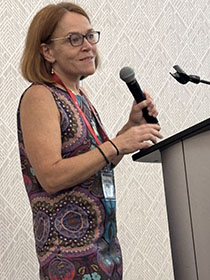
Dr. Sarah Elsea presented an overview of her laboratory’s ongoing research to better understand the complex metabolic changes associated with CTX. Using advanced metabolomic technologies, her team is studying the thousands of small molecules, or metabolites, found in biological samples to develop a more complete picture of how CTX affects the body’s biochemical pathways beyond those that are already well understood.
The long-term goal of this research is to identify new biomarkers that could improve diagnosis, monitor disease progression, and evaluate treatment response. By expanding our understanding of the metabolic fingerprint of CTX, this work has the potential to uncover previously unrecognized aspects of the disease and generate new opportunities for precision medicine and future therapeutic development. While much of this research remains ongoing, Dr. Elsea’s presentation highlighted the important role that metabolomics may play in advancing the understanding and management of CTX in the years ahead.
 Exploring Combined Bile Acid Therapy in CTX:
Dr. Ernst Schaefer explored an emerging area of CTX treatment by examining the potential role of combined bile acid therapy using both chenodeoxycholic acid (CDCA) and cholic acid (CA). He reviewed the biology of CTX, explaining that mutations in the CYP27A1 gene result in deficiencies of both primary bile acids. While CDCA has long been considered the standard treatment and has significantly improved outcomes for many individuals with CTX, Dr. Schaefer noted that some patients continue to experience neurological progression despite years of therapy. This observation has prompted researchers to consider whether replacing both missing bile acids may offer additional clinical benefits for certain patients.
Drawing on published evidence and early clinical experience, Dr. Schaefer presented preliminary observations from a small number of patients who have received combination therapy. Although these early experiences are encouraging for some individuals, he emphasized that the evidence remains limited and that larger, carefully designed clinical studies are needed before combination therapy can be recommended routinely. His presentation concluded with a call for additional research to compare combination treatment with CDCA or cholic acid alone, with the ultimate goal of improving long-term neurological outcomes and optimizing therapy for individuals living with CTX.
 How Common is CTX Overall and in Young People with Cataracts?:
Dr. Robert Steiner, Professor at the University of Wisconsin School of Medicine and Public Health and Vice President of the CTX Alliance Board of Directors, explored one of the most important questions in the CTX community: “How many people actually have CTX?” Drawing on recent genetic research and population studies, he explained that CTX is almost certainly significantly underdiagnosed. Although fewer than 200 individuals are currently known to be receiving treatment in the United States, genetic studies suggest that thousands of people may be living with CTX without a diagnosis. Because the average delay between the first symptoms and diagnosis is 15–20 years, many individuals miss the opportunity for early treatment before irreversible neurological damage occurs. Dr. Steiner emphasized that better estimates of disease frequency are essential for raising awareness, supporting public health initiatives, accelerating newborn screening efforts, and improving access to diagnosis and care.
A major focus of the presentation was the strong relationship between juvenile bilateral cataracts and CTX. Dr. Steiner reviewed studies demonstrating that children and young adults with unexplained cataracts are far more likely to have CTX than the general population. In several multicenter screening studies, approximately 1.5–3% of patients with early-onset bilateral cataracts were diagnosed with CTX—hundreds of times higher than expected in the general population. These findings reinforce the importance of considering CTX whenever a child or young adult presents with bilateral cataracts, particularly when accompanied by other features such as chronic diarrhea, developmental or learning differences, tendon xanthomas, or neurological symptoms. Dr. Steiner concluded that increasing awareness among ophthalmologists and other healthcare providers represents a powerful opportunity to identify CTX earlier, initiate treatment sooner, and prevent lifelong disability.
 Aldafermin Clinical Trial Update:
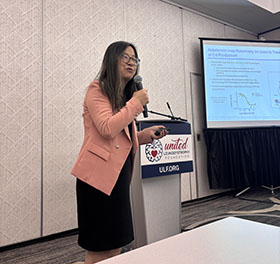
Dr. Lei Ling provided an update on the ongoing clinical development of aldafermin, an investigational therapy being studied as a potential treatment for CTX. She reviewed the scientific rationale behind the therapy and explained how researchers are evaluating whether aldafermin can improve bile acid metabolism and reduce the harmful biochemical changes that occur in CTX. The presentation highlighted the importance of developing additional therapeutic options that may complement existing treatments and further improve outcomes for individuals living with the disease.
Dr. Ling also discussed the current status of the clinical trial, including its objectives and the role that carefully designed research studies play in determining the safety and effectiveness of new therapies. She emphasized that clinical trials are essential for advancing CTX care and expanding future treatment options for patients. While aldafermin remains an investigational therapy and additional research is needed before its role in CTX can be determined, the study represents another important step toward improving long-term care for individuals affected by this rare disease.
 Improving Genetic Testing for CTX:
Dr. Jennifer Rossen provided an update on the work of the ClinGen Pediatric Cataract Variant Curation Expert Panel (VCEP), an international group dedicated to improving the accuracy and consistency of genetic testing for genes associated with pediatric cataracts. The first gene of focus is CYP27A1, the gene associated with CTX. She explained that nearly half of the known CYP27A1 gene variants are currently classified as either variants of uncertain significance (VUS) or have conflicting interpretations between laboratories. This uncertainty can make it difficult for patients and physicians to know whether a genetic change is truly disease-causing. The VCEP is developing standardized guidelines for interpreting CYP27A1 variants so that genetic testing results are more consistent, reliable, and clinically meaningful.
Dr. Rossen also highlighted several important advances that will improve CTX diagnosis in the future. Because CYP27A1 was added to the American College of Medical Genetics and Genomics (ACMG) Secondary Findings List in 2025, individuals undergoing whole exome or whole genome sequencing for other medical reasons may now have disease-causing CTX variants identified and reported. She emphasized that patient registries and shared clinical data will play an important role in helping researchers classify genetic variants more accurately, ultimately leading to fewer uncertain results and earlier diagnoses for individuals with CTX.
 Looking Ahead
This year’s Summit demonstrated how far the CTX community has come—and how much opportunity lies ahead to improve the lives of individuals and families affected by CTX. Throughout the day, presenters reinforced a common message: early diagnosis and early treatment remain the most powerful tools for preventing irreversible disease progression. At the same time, exciting advances in newborn screening, biomarker discovery, genetic testing, clinical research, and emerging therapies are creating new opportunities to improve outcomes for individuals living with CTX.
The CTX Alliance extends its sincere gratitude to all of the speakers, moderators, attendees, volunteers, and partners who made this year’s Summit our largest and most successful to date. Together, we continue to build a stronger, more connected CTX community while accelerating progress toward earlier diagnosis, better treatments, and brighter futures for every individual and family affected by CTX.